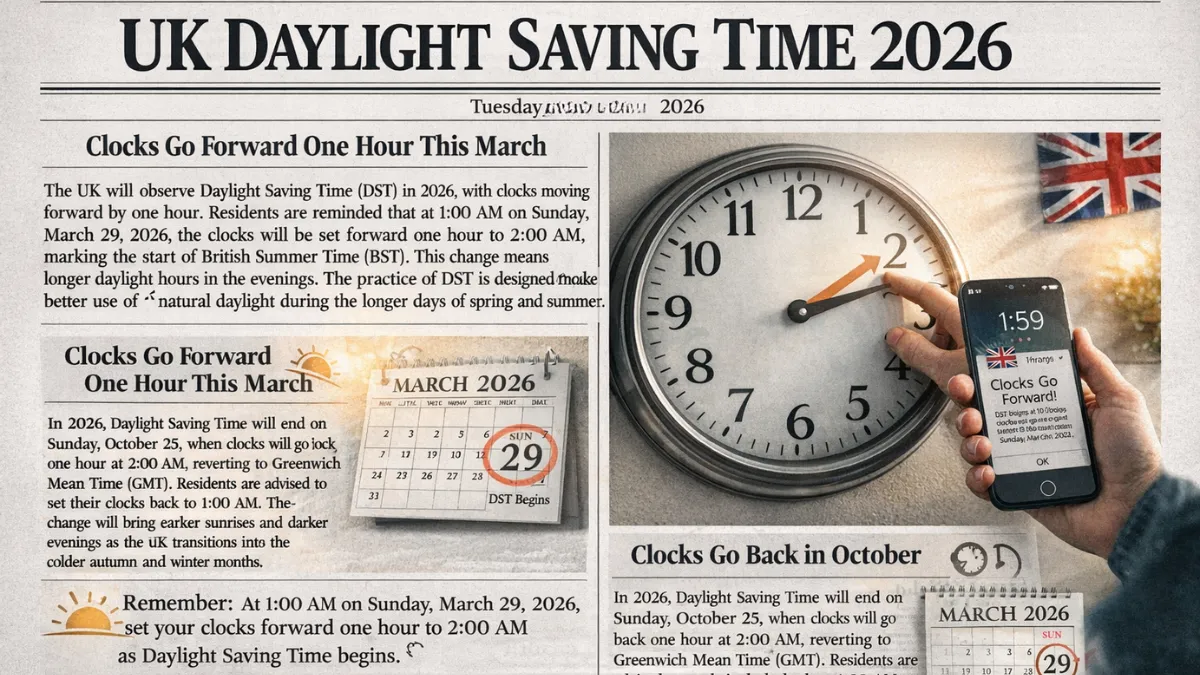
UK Daylight Saving Time 2026: People across the United Kingdom are preparing for the next change in Daylight Saving Time (DST) in 2026, when clocks will once again shift to adjust daylight hours. The seasonal clock change is a long-standing practice in the UK designed to make better use of natural daylight during different times of the year. Every spring, clocks move forward by one hour, and in autumn they move back again.
The upcoming change means that many households, businesses, and organisations will need to adjust their schedules accordingly. Although most digital devices update automatically, it is still important for people to be aware of the exact dates to avoid confusion.
When the Clocks Will Change in 2026
In 2026, the UK will switch to British Summer Time (BST) on Sunday, 29 March 2026. At 1:00 AM, the clocks will move forward by one hour to 2:00 AM. This change effectively gives people an extra hour of daylight in the evening but one hour less in the morning.
Later in the year, the clocks will move back again to Greenwich Mean Time (GMT) on Sunday, 25 October 2026. At 2:00 AM, the clocks will go back to 1:00 AM, restoring the hour that was lost in spring.
Why the UK Uses Daylight Saving Time
Daylight Saving Time was originally introduced to make better use of daylight and reduce energy consumption. By shifting the clocks forward during spring and summer, people can enjoy longer evenings with more natural light. This can help reduce the need for artificial lighting during the evening hours.
Although the practice has been debated over the years, many countries across Europe continue to use similar time adjustments to align daily activities with daylight patterns.
How the Time Change Can Affect Daily Life
The shift in time can temporarily affect sleep patterns, work schedules, and daily routines. Some people may experience minor disruption to their sleep for a few days after the clocks change. However, most individuals adjust quickly to the new schedule.
Businesses, transport services, and international communication systems also rely on accurate timing adjustments. Airlines, rail networks, and digital systems typically prepare well in advance to ensure the transition happens smoothly.
Tips to Adjust to the Clock Change
To reduce the impact of the time change, people can gradually adjust their sleep schedule a few days before the clocks move forward. Going to bed slightly earlier and maintaining consistent sleep routines can help the body adapt more easily.
Ensuring exposure to natural daylight during the day and limiting screen time before bedtime may also help regulate sleep patterns during the transition.
Conclusion: The 2026 Daylight Saving Time changes in the UK will see clocks move forward on 29 March and back again on 25 October. While the adjustment may briefly affect daily routines, it allows people to make better use of daylight during the warmer months. Staying aware of the key dates helps households, businesses, and organisations prepare for the seasonal time shift.
Disclaimer: This article is for informational purposes only. Time change policies and dates are generally set by the UK government but may be reviewed in the future. Individuals should check official government sources for the most accurate information regarding Daylight Saving Time changes.