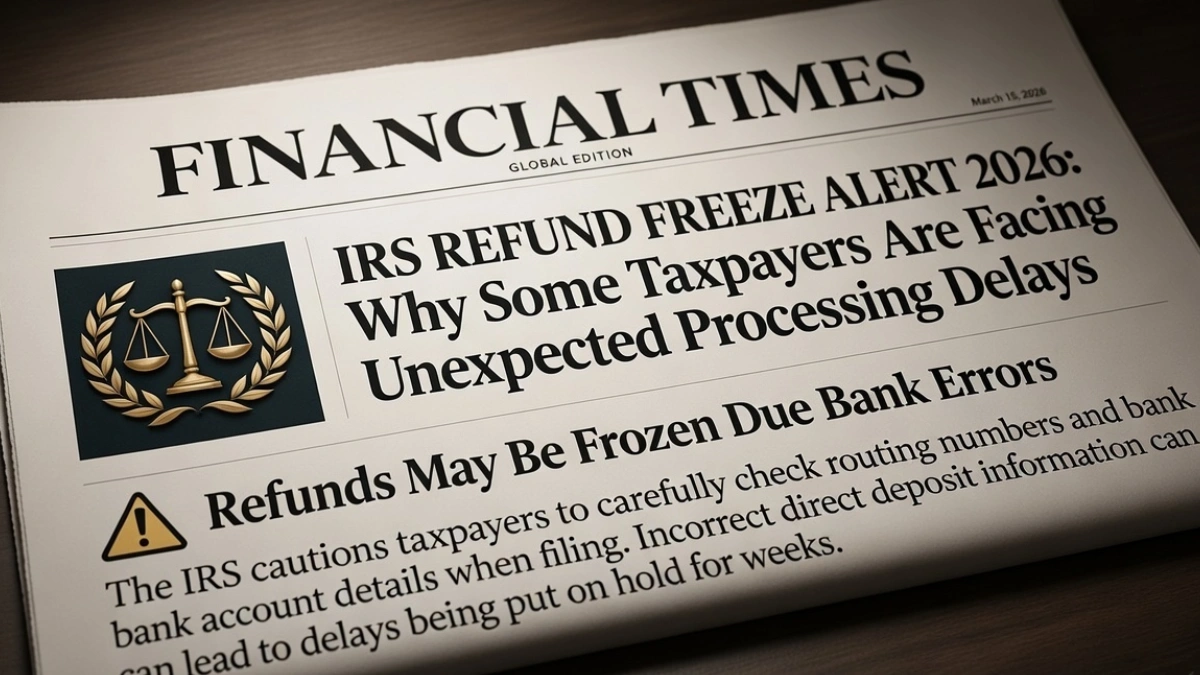
In 2026, many taxpayers have reported unexpected delays in IRS refund processing, sometimes referred to as “refund freezes.” These delays affect direct deposits and mailed checks and can create confusion for households relying on timely payments.
Refund freezes usually occur due to verification issues, corrections, or eligibility checks that the IRS must complete before releasing funds.
Common Causes of Refund Delays
Refund delays can arise from incorrect banking information, identity verification, missing documentation, or claims for refundable credits such as the Earned Income Tax Credit (EITC) and Child Tax Credit.
Some delays are also caused by manual reviews triggered by mismatched income reporting or errors in tax returns.
Who Is Most Affected
Taxpayers who filed late, have complex returns, or claimed refundable credits are most likely to experience a freeze. Early filers with simple returns generally receive payments faster.
State-Wise Sample Freeze Table
| State | Refunds Processed | Refunds Frozen | Likely Causes |
|---|---|---|---|
| California | 1,450,000 | 50,000 | EITC verification, corrections |
| Texas | 1,150,000 | 50,000 | Banking info mismatches |
| Florida | 950,000 | 50,000 | Manual review of returns |
| New York | 870,000 | 30,000 | Identity verification issues |
| Illinois | 720,000 | 30,000 | Paper check processing delays |
| Pennsylvania | 680,000 | 20,000 | Missing forms or corrections |
The table shows sample state-wise refunds processed, frozen refunds, and typical causes for the delays in 2026.
Tips to Avoid Refund Freezes
Taxpayers should verify bank account information, file accurately, submit complete documentation, and track refunds using the IRS “Where’s My Refund?” tool. Promptly correcting errors can reduce the chance of a freeze.
Conclusion
IRS refund freezes in 2026 may delay payments for some taxpayers, particularly those with complex filings or pending verification issues. Staying proactive, filing accurately, and monitoring the official portal ensures refunds are processed as efficiently as possible.
Disclaimer: This article is for informational purposes only. IRS refund schedules, freezes, and processing timelines are subject to official announcements. Taxpayers should consult the IRS website or a certified tax professional for accurate guidance.