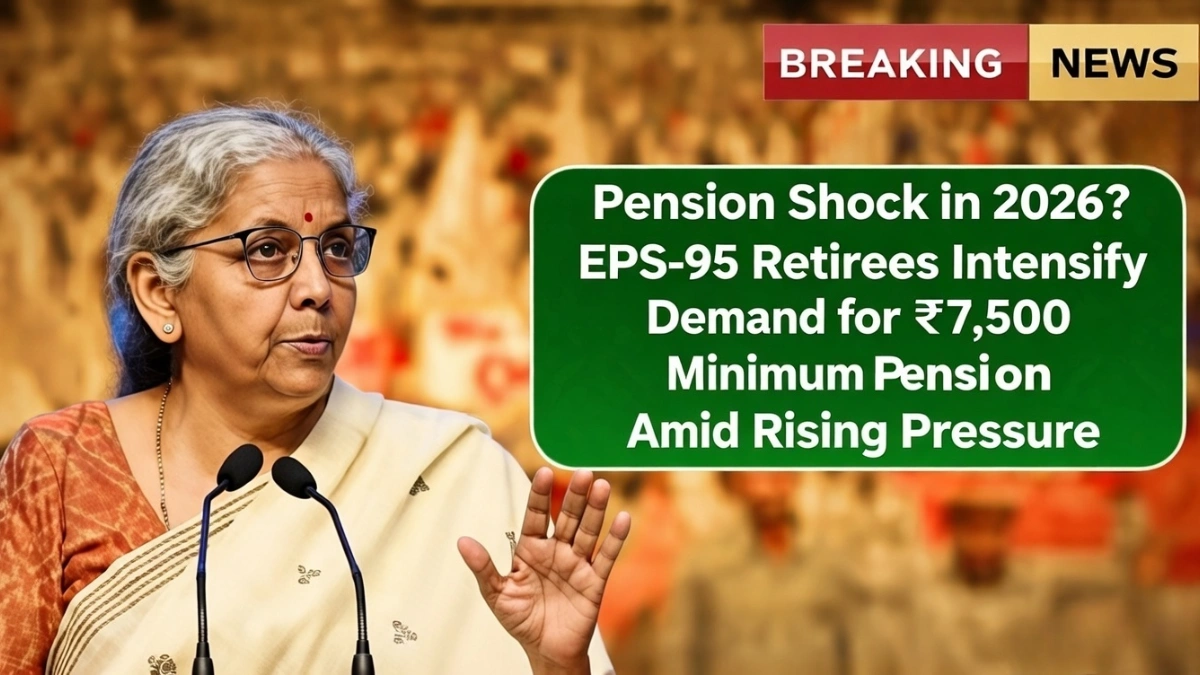
The debate around pension reform has once again gained momentum in 2026 as thousands of retirees under the Employees’ Pension Scheme continue to push for a minimum monthly pension of ₹7,500. With inflation steadily eroding purchasing power, pensioners argue that the current payout structure is no longer sufficient to meet basic living expenses.
The demand has put the spotlight on the Employees’ Pension Scheme, commonly known as EPS-95. Managed by the Employees’ Provident Fund Organisation, the scheme provides pension benefits to employees who have completed the required service period under EPF-covered establishments.
Why Are EPS-95 Pensioners Demanding ₹7,500 Minimum Pension
Under the present structure, many EPS-95 retirees receive pensions that range between ₹1,000 and ₹3,000 per month, depending on salary history and service duration. Pensioner associations argue that such amounts are inadequate in the current economic environment.
The key demands include: A minimum assured pension of ₹7,500 per month Dearness Allowance linked to inflation Free or subsidized medical benefits for retirees and spouses Retirees state that with increasing healthcare costs and everyday inflation, pension revisions are essential for financial survival.
Background of the EPS-95 Scheme
The Employees’ Pension Scheme was introduced in 1995 to provide post-retirement income to private sector workers. Contributions are made by diverting a portion of the employer’s EPF contribution toward the pension fund.
However, unlike government pensions that are periodically revised through pay commissions, EPS pensions have not seen proportional upward revisions in minimum payout amounts. This gap has widened significantly over the years.
Impact of Inflation on Pensioners
In 2026, the cost of essential commodities, healthcare, and utilities continues to rise. For retirees without additional income sources, low pension payouts create financial strain. Pensioner groups argue that the absence of a structured dearness relief mechanism linked to inflation leaves EPS-95 beneficiaries vulnerable. Many retirees rely entirely on their monthly pension for survival.
The demand for ₹7,500 as a minimum pension is seen as a corrective step to align pensions with present-day living costs.
Government’s Position So Far
While the government has acknowledged representations from pensioner associations, any increase in minimum pension requires actuarial evaluation and financial sustainability assessment of the pension fund. Policy decisions must balance fiscal responsibility with social welfare commitments. Increasing the minimum pension to ₹7,500 would significantly impact the EPFO’s pension outgo.
There have been periodic discussions, but as of now, no official confirmation has been issued regarding a hike to the demanded level.
Supreme Court and Higher Pension Context
Recent developments regarding higher pension options under EPS have also influenced the debate. Certain eligible employees were allowed to opt for higher pension contributions based on actual salary instead of capped wages. While this benefits a segment of retirees, a large portion of pensioners still fall under the basic minimum structure, intensifying calls for broader reform.
What Retirees Are Asking Beyond ₹7,500
Beyond the ₹7,500 minimum pension demand, retirees are also seeking medical coverage similar to government health schemes and timely disbursal without delays.
They argue that long years of service in the private sector deserve dignified post-retirement support comparable to other structured pension systems.
Possible Outcomes in 2026
Several scenarios may unfold in 2026: The government could revise the minimum pension partiallyA structured review committee may be formed Incremental relief linked to inflation may be introduced Any decision would require amendments to existing pension regulations and financial allocation approvals.
Why This Issue Matters Nationally
EPS-95 pensioners represent a large segment of retired private sector workers across India. Their financial well-being directly impacts household stability and social security coverage.
As conversations around social welfare and pension reforms gain traction in 2026, the outcome of this demand could set a precedent for future retirement policy reforms.
Conclusion
The demand for a ₹7,500 minimum pension under EPS-95 in 2026 reflects deeper concerns about retirement security in the private sector. With inflation rising and medical expenses increasing, retirees are seeking meaningful revisions that ensure dignity and financial stability.
While no official announcement has been made yet, ongoing discussions suggest that pension reform remains a sensitive and closely watched issue. The coming months may prove crucial in determining whether EPS-95 retirees receive the relief they have long demanded.
Disclaimer: This article is for informational purposes only. Pension revisions depend on official government notifications and policy decisions.